
Glass gets most of the attention, but metal railings do a lot of the work on decks, docks, stairs and balconies. They cost less than glass on long runs, they're easy to keep clean, and the right style can disappear into the view or become part of the design. Most projects come down to three styles: cable, picket and rod.
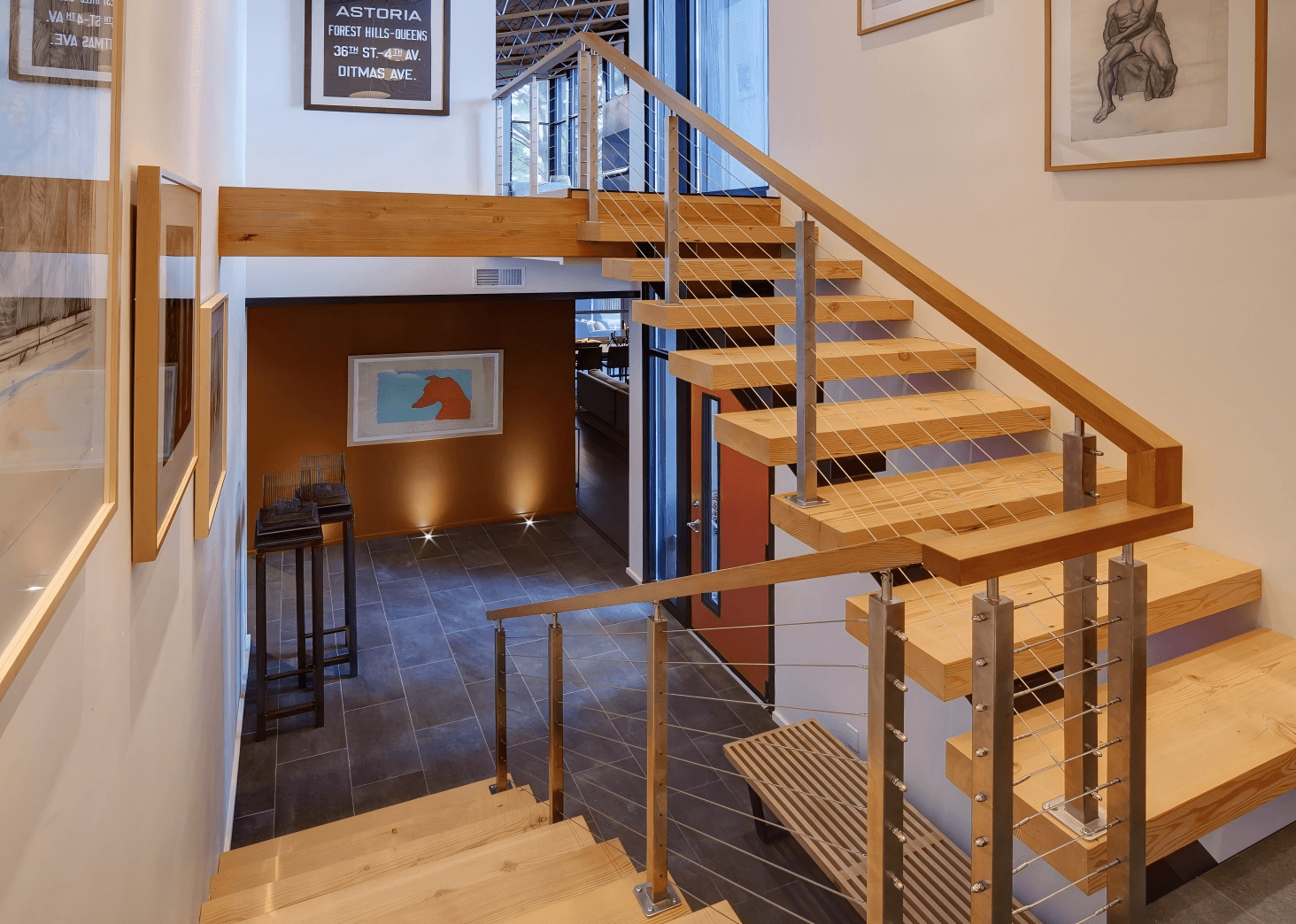
Cable railings
Thin stainless steel cables run horizontally between posts. From a few steps back they almost vanish, which makes cable a favourite for waterfront decks and docks where the view is the point.
Things to know:
- 01Cables are tensioned, so they need a check and a tighten now and then.
- 02Horizontal cables can be climbed. If young children will use the space, talk it through with your architect before choosing cable.
- 03Near the sea, ask about the stainless steel grade and rinse the cables with fresh water now and then.
Picket railings
Vertical bars, or pickets, between a top and bottom rail. It's the classic railing for good reason: simple, sturdy and easy to match to the house.
Picket railings in powder-coated aluminium are light, won't rust and come in black or white. They suit traditional and contemporary homes alike, and the vertical bars are harder to climb than horizontal ones.
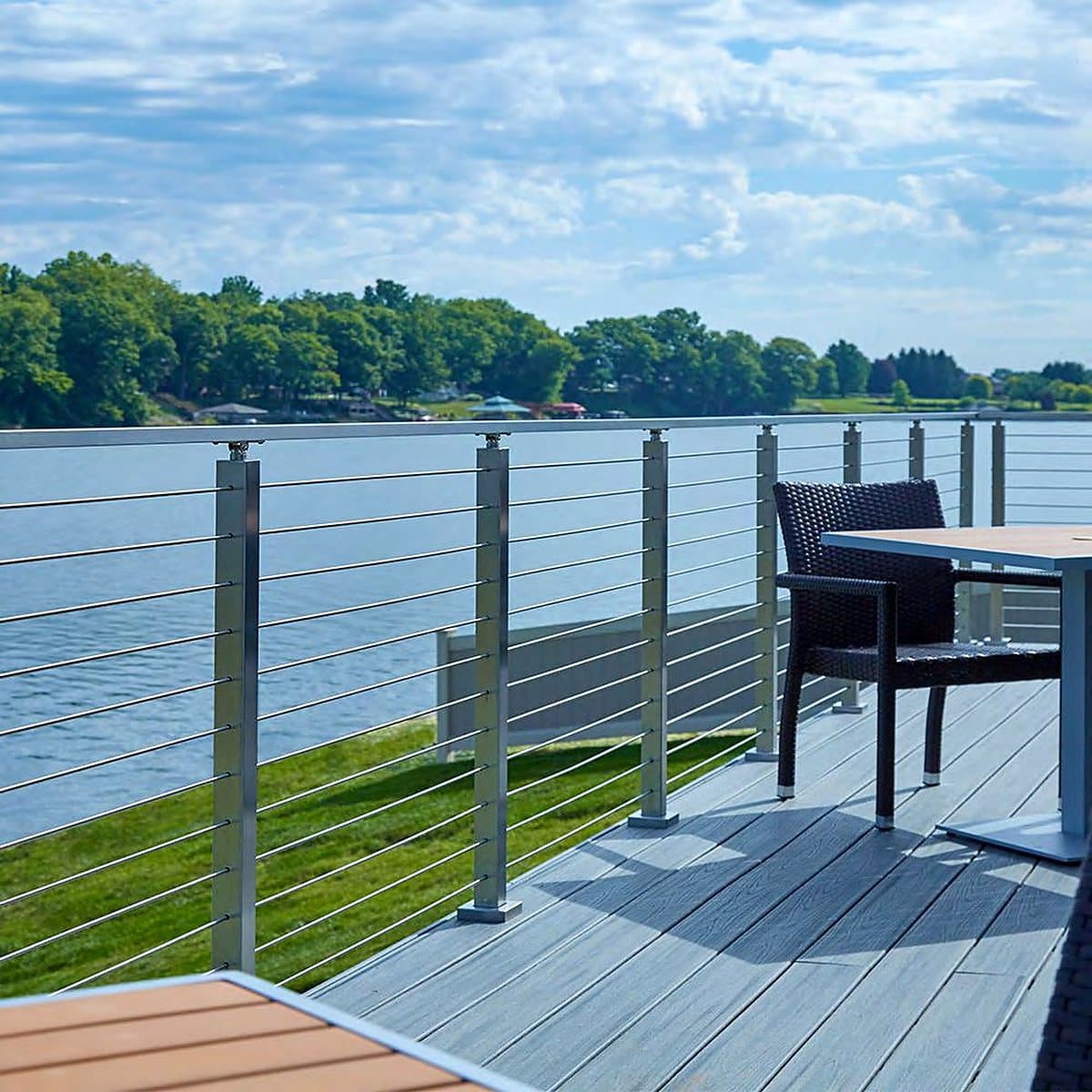
Rod railings
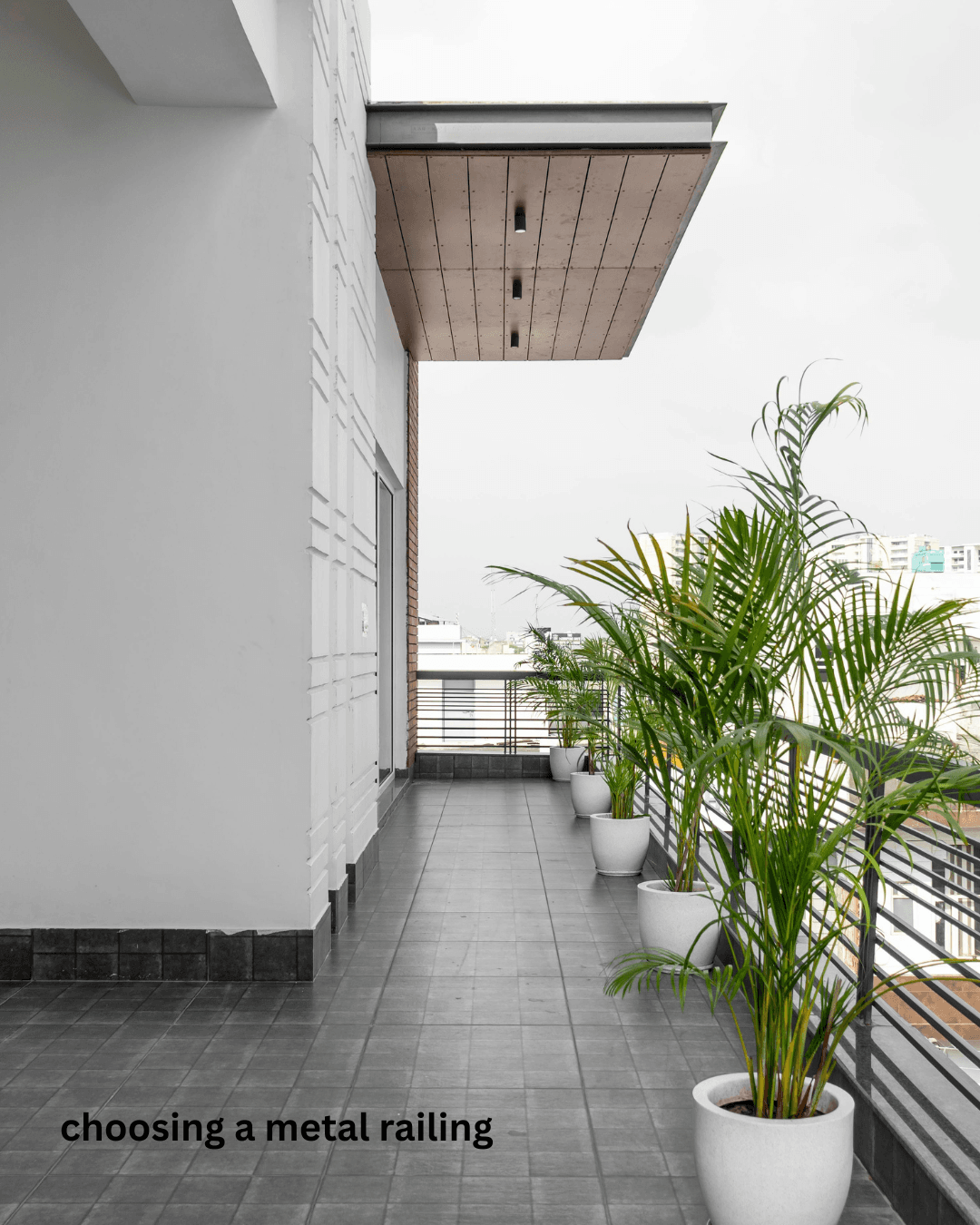
Solid horizontal rods between stainless steel posts give a sturdier, more architectural look than cable. Rod works well on modern homes, internal stairs and galleries, anywhere the railing should read as a design detail.
Posts come in stainless steel or black. Like cable, horizontal rods can be climbed, so if young children will use the space, talk it through with your architect.
Handrails and wall rails
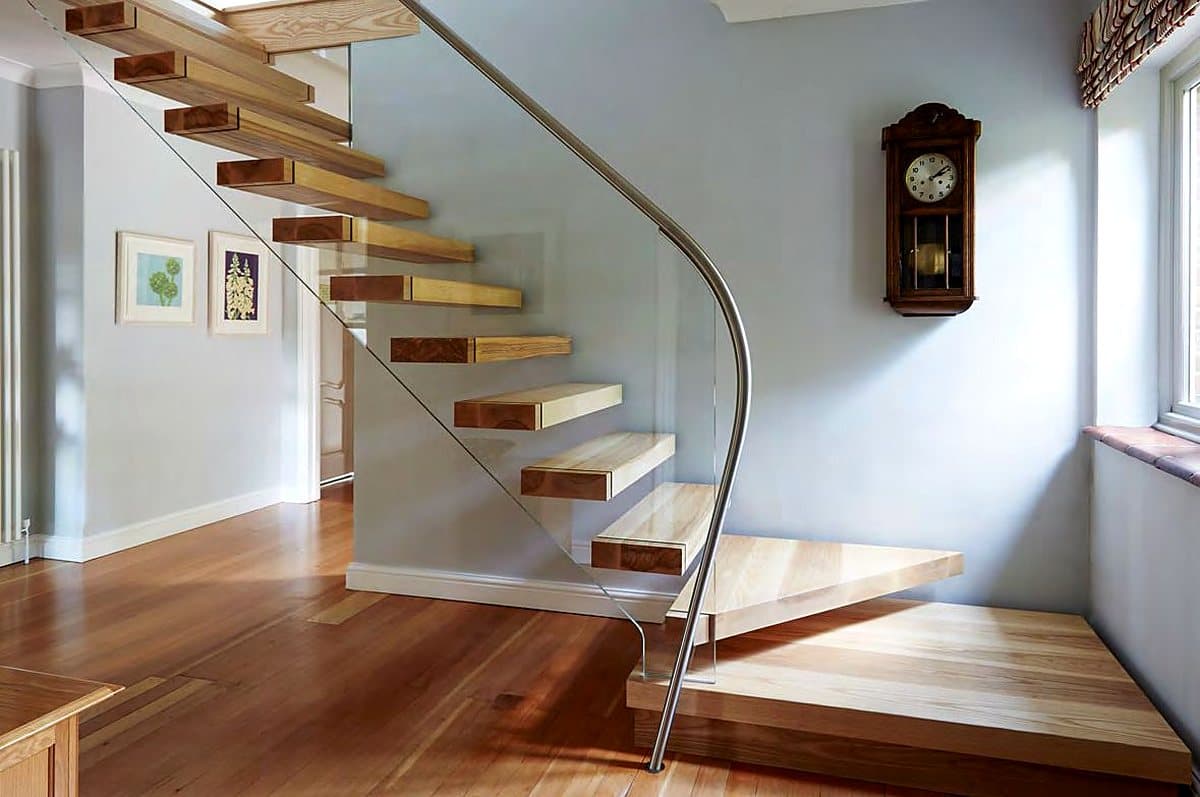
Stairs usually need something to hold on to, even when the guarding is glass or picket. A continuous handrail along the guarding, or a wall-mounted rail on the other side, makes stairs safer and easier to use. Match the finish to the railing so the two read as one system.
Choosing a finish
- 01**Brushed or satin stainless:** a soft, natural metal look that suits the coast.
- 02**Black powder-coat:** sharp and modern, and it frames the view rather than competing with it.
- 03**White powder-coat:** clean and classic, especially on Caribbean-style homes.
Whatever the finish, rinse railings near the sea with fresh water from time to time. Salt left sitting on any metal surface does it no favours.
Before you decide
Guard heights, gaps and loading depend on where the railing goes and how the space is used. Your architect or contractor will confirm what applies to your project.
Getting a price
Send us drawings or measurements, where the railing will go and the style you're leaning towards. We'll come back with options and a quote. Email sales@primacayman.com or request a quote through the site.